You want a Topsfield remodeler who understands 780 CMR, local bylaws, zoning, and septic/ConCom triggers. Anticipate stamped plans, correct use classifications, setback/height/lot coverage checks, and coordinated permits. Require line-item proposals, allowances, alternates, verified licenses/insurance, OSHA cards, and inspection-tied schedules. They should manage utilities, egress, fire protection, structural loads, AFCI/GFCI, air sealing, and documentation through final commissioning. Weekly progress reports, RFI response, and strict change-order control keep budget and schedule tight. Discover how to get more info select that contractor and set proper expectations.
Critical Takeaways
- Topsfield professionals who navigate 780 CMR, municipal zoning, and permit sequencing to prevent project delays and failed inspections.
- Transparent, CSI-format proposals with detailed line-by-line pricing, allowances, optional choices, warranties, and explicit inclusions/exclusions.
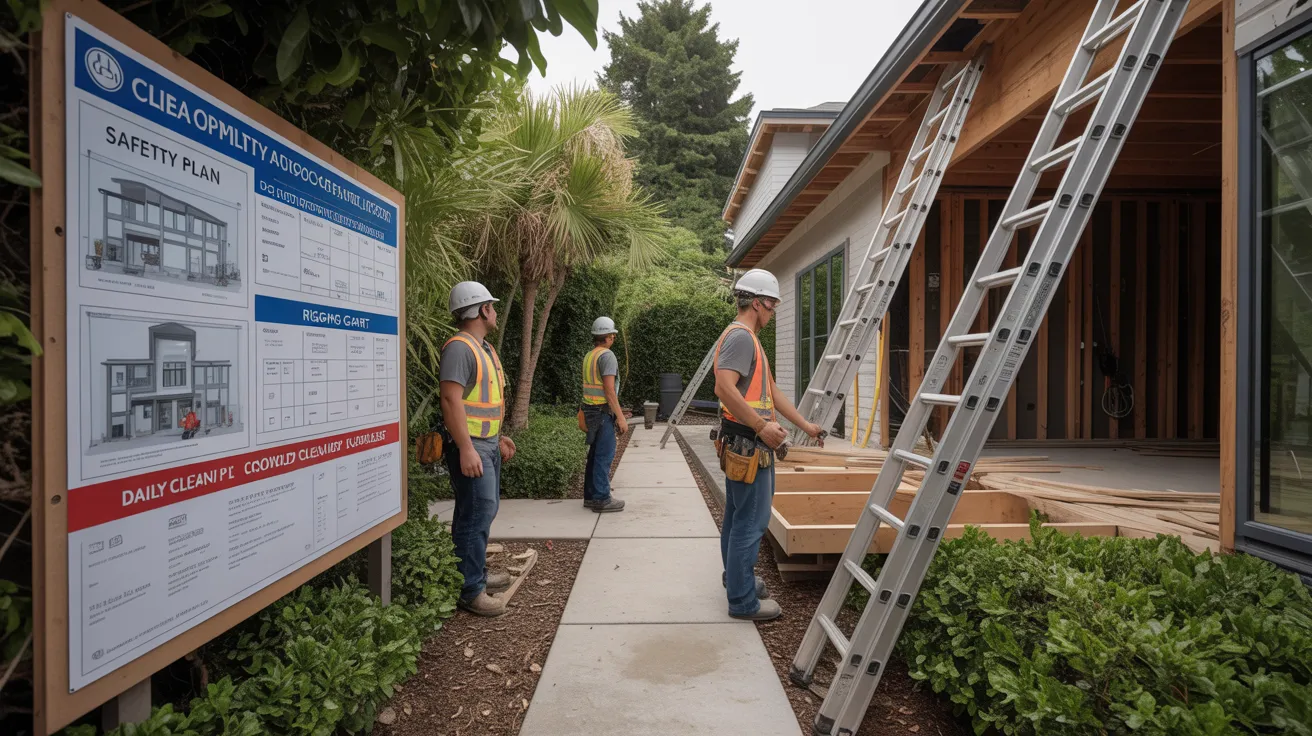
- Validated licenses, insurance, OSHA certifications, and subcontractor lists with supervision ratios and daily worksite safety/cleanup.
- Master schedules aligned with permits, inspections, and lead times, offering weekly progress updates and rapid RFI responses.
- Expert workmanship to code and manufacturer specs, with compliant egress, energy performance, and EPA/RRP standards for hazards.
Exactly Why Regional Expertise Is Essential in Topsfield Home Remodeling
Since Topsfield's construction context is specific, local remodeling expertise guarantees your project complies with the town's bylaws, zoning, and the Massachusetts State Building Code (780 CMR) without setbacks. You benefit from accurate permit scoping, appropriate use classifications, and precise setback, height, and lot coverage calculations. A local expert foresees Conservation Commission triggers, historic district review, and Board of Health septic requirements, sequencing approvals to prevent stoppages.
They leverage community knowledge to specify compliant egress, stair geometry, energy code prescriptive paths, wind/snow loads, and smoke/CO placement. They arrange utility mark-outs, right-of-way access, and construction hours under neighborhood regulations. You obtain stamped plans aligned with 780 CMR, structural analyses for alterations, and product submittals that align with listed assemblies-minimizing RFIs, inspections failures, and change orders.
Signs You've Discovered a Trustworthy Remodeling Contractor
You know you've chosen a reliable partner when proposals specify scope, materials, specs, permitting, and warranties with line-by-line precision. You verify strong local references that verify code-compliant work, clean inspections, and scheduled completion in Topsfield. You also get upfront timelines and costs with milestones, change-order procedures, and documented contingencies.
Clear, Detailed Proposals
Demand a written proposal that breaks down scope, materials, labor, allowances, timeline, and exclusions with construction specification institute clarity. You should see categories, specifications, and product data that reference applicable codes and manufacturer standards. Demand line-item pricing, unit quantities, and contingency percentages. The contractor should provide material samples, cut sheets, and finish schedules that match the specified brands and models.
Insist on proposal templates that standardize alternates, value-engineering options, and allowances with not-to-exceed limits. Check lead times, critical-path milestones, inspection points, and closeout deliverables. Ensure the proposal defines permit responsibility, debris management, site protection, and utility shutdown procedures. Exclusions must be explicit-no hidden "TBD." Demand change-order rules: written authorization, unit rates, and schedule impacts. If it's not documented, you cannot assume it's included.
Robust Area References
Frequently, the most trustworthy indicator of a reputable remodeler is a deep bench of current, local references you can validate. Obtain addresses, scopes, and dates so you can evaluate similar projects to yours. Reach out to homeowners directly; seek specifics on code compliance, inspection approvals, punch-list completion, and post-project responsiveness. Drive by finished sites to check fit-and-finish, flashing details, trim alignment, and material shifts.
Obtain local references from homeowners association boards, building inspectors, and suppliers that have monitored performance over time. Validate contractor experience by validating ongoing work on the same roads and referrals across adjacent neighborhoods. Review licenses, permits pulled, and lien histories against town records. Previous clients should confirm schedule adherence to inspections, well-maintained sites, respectful crews, and warranty execution without complications.
Clear Schedules and Pricing
Reliable references define expectations; now find a contractor who maps out the work via a phased schedule, documented milestones, and a cost structure that's transparent and verifiable. You should receive a critical path timeline containing start/finish dates, float allowances, and defined project milestones linked to inspections, rough-in, and punch list. The proposal should list out labor, materials, permits, contingencies, and allowances, with unit costs and alternates properly identified.
Demand written payment schedules tied to measurable milestones, not vague percentages. Demand change-order procedures that include scope description, delta cost, schedule impact, and approvals before work begins. Request weekly updates: progress vs. baseline, risk log, and look-ahead. Establish code-driven checkpoints—foundation work, framing, MEP rough,and warranty closeout documents. If they quantify and verify, you can plan confidently.
Primary Services: Kitchens, Baths, Additions, and Historic Restorations
You obtain custom kitchen upgrades engineered for workflow, ventilation, and code-compliant electrical and GFCI layouts. You select spa-like bath remodels with correctly graded showers, waterproofing membranes, pressure-balanced valves, and ADA-ready clearances where needed. You plan seamless additions and historic restorations with coordinated structure and envelope, zoning and setback compliance, and period-correct details integrated with modern MEP systems.
Customized Kitchen Improvements
Step into a kitchen transformation that merges craftsmanship with code compliance, from structural reconfiguration to precision finishes. We start with a calculated layout, verifying load paths before removing walls and sizing new LVLs per engineer specs. You'll get streamlined workflow zones, smart storage crafted to cabinet standards, and durable surfaces with manufacturer-approved clearances from heat and water.
We perform rewiring that complies with current NEC: dedicated circuits for small appliances, ground-fault and arc-fault protection, and separately switched dimmable island lighting. We enhance ventilation to satisfy CFM standards, install make-up air systems as required, and exhaust to outdoor locations. Plumbing is reconfigured with proper slope, individual isolation valves, and fixtures with pressure-balancing technology. We fit appliances using accurate rough-in specifications, required combustion spacing, and venting. Finally, we commission every system, confirm all tolerances, and document warranties.
Luxury Spa Bath Upgrades
Drift into a premium spa bath that unites relaxing design with thorough code compliance. You'll get moisture-controlled assemblies, GFCI/AFCI protection, and suitably sized ventilation per code. We install environmentally friendly fixtures, low-flow valves, and scald-guard thermostatic mixers. Aromatherapy shower units integrate sealed steam enclosures, sloped ceilings, and vapor-retarder membranes approved for high perm control.
We provide slip-resistant tile, pitched shower pans to linear drains, and ANSI A118-compliant waterproofing. Lighting incorporates wet-location trim, dimmable drivers, and correct IP ratings inside enclosures. You'll experience heated floors with dedicated circuits, smart controls, and listed thermostats. We specify exhaust fans to CFM and sone targets, ducted outdoors. Storage is integrated with sealed cabinetry, quiet-close hardware, and hygienic finishes. Every fixture is positioned according to manufacturer specs and inspected before closeout.
Smooth Expansions & Remodeling
As plans progress, execution continues exacting in our expertly crafted additions and restorations-everything from kitchens and baths to whole-house expansions and historic preservation. You'll get precise layout coordination, structural tie-ins built to comply with current code, and precise junctions at envelopes, roofing, and floor systems. We build energy efficient additions with state-of-the-art air sealing, continuous insulation, and properly sized HVAC, verified by blower-door testing. Window schedules coordinate solar gain with comfort, and landscape integration manages grading, drainage, and accessible entries.
In historic restoration work, we catalog existing conditions, replicate species and profiles, and employ reversible methods according to preservation standards. We upgrade wiring, plumbing, and egress to code without compromising period details. Kitchens and baths receive durable substrates, moisture control, and ventilation integrated to ERV systems. Permit sets incorporate stamped calculations, product data, and inspection requirements.
The Remodeling Process: From Your First Consultation to the Final Walkthrough
Before any demolition begins, a compliant remodeling project begins with a structured consultation where you define scope, budget, and priorities, and your contractor documents existing conditions with measurements, photos, and, when necessary, exploratory openings. You'll review material selection corresponding to performance specs, durability, and code-listed assemblies. Next, project phasing is sequenced to safeguard occupied areas and critical paths. Permits and stamped plans are obtained prior to site preparation: utility locates, dust containment, negative air, and protected egress.
Demolition work complies with EPA/RRP standards when applicable, with environmental assessments for lead, asbestos, and waste diversion. Rough-in work complies with current Massachusetts codes: framing, electrical AFCI/GFCI, plumbing venting, and energy code insulation/air sealing, confirmed through inspections. Finishing commences after drywall moisture and flatness inspections. The final walkthrough validates punch-list closure, warranties, manuals, and compliance paperwork.
Effective Communication, Scheduling, and Cost Transparency
On small-scale projects, you need a well-defined communication plan, a baseline schedule, and transparent cost controls to maintain project predictability and code compliance. You'll get a single point of contact and structured client communication: project kickoff agenda, weekly status emails, and same-day responses to RFIs. We map milestones to permits, inspections, and lead times, then fix task sequencing to eliminate rework and maintain safety and building code adherence. You'll see a Gantt schedule with critical-path analysis, float, and dependencies.
For cost management, we utilize line-item estimates, allowance logs, and change order forms with scope, labor, and material deltas. Budget tracking updates show committed vs. actuals and contingency drawdowns. You'll authorize variances before procurement, ensuring audit-ready documentation and predictable cash flow.
Superior Craftsmanship and Materials That Endure Through Time
Because longevity is built on methodology and materials, we engineer to manufacturer specs and Massachusetts building code, not just appearance. You get assemblies engineered for load paths, moisture control, and thermal performance, so components work together for decades.
We require kiln-dried lumber, exterior-rated sheathing, and corrosion-resistant fasteners appropriate for coastal conditions. Joint areas get proper adhesives and structural fastening methods, not shortcuts. We use durable finishes applied over appropriately prepared substrates with measured film thickness and verified cure times. Our tile work uses ANSI-rated mortars, membranes, and movement joints. Cabinet and door installations use durable hardware: stainless or solid-brass copyrights, soft-close slides with high cycle ratings, and fasteners that resist stripping.
We inspect slopes, clearances, and ventilation, shielding assemblies from water intrusion and premature wear. Your remodel functions, looks sharp, and keeps that appearance.
Topsfield Permits, Codes, and Regulatory Compliance
Even though design guides the vision, every Topsfield remodel works by securing the correct permits and satisfying Massachusetts State Building Code (780 CMR), local ordinances, and Board of Health requirements. You must establish scope, identify work, and assemble stamped plans, energy compliance, and site details that handle zoning setbacks, lot coverage, and height. Verify conservation or historic triggers ahead of filing.
Define permit timelines pragmatically: plan review, revisions, issuance, and required notices to dig. Coordinate utilities, egress, fire protection, and structural loads to meet building codes and 780 CMR amendments. Schedule inspections at critical stages-footings, framing, rough MEPs, insulation, and final-using the town's inspection scheduling procedures. Maintain accessible job-site documents, handle correction notices quickly, and obtain certificates of occupancy or completion before using spaces.
Advice for Vetting Contractors and Comparing Proposals
Before you request bids, specify scope, performance specs, and finish schedules so you can assess apples-to-apples proposals against the same drawings and 780 CMR/code requirements. Demand written inclusions/exclusions, unit prices, allowances, and alternates. Require from each bidder for license numbers, OSHA-10/30 credentials, and proof of contractor insurance (GL and workers' comp) with limits and endorsements. Confirm bonding capacity for larger projects. Compare schedules, milestones, and sequencing relative to inspections and lead times.
Obtain product details, installation methods, and material warranties; verify who handles registration, time period, and transferability. Examine subcontractor rosters, supervision ratios, and daily quality control/site cleanup. Demand permit responsibility, utility coordination, and closeout deliverables (as-builts, O&M manuals). Employ a uniform bid form, then evaluate price, qualifications, references, safety record, and change-order methodology.
Common Questions
Do You Provide Design-Only Services Without Construction?
Yes, we offer design-only services. You'll receive structured design consultations, site measurements, and code-compliant drawings (PDF and CAD formats) appropriate for permitting. We'll create schematic plans, elevations, and fixture and finish schedules, then provide concept revisions to refine scope, egress, clearances, and load-path impacts. You retain the design package to put out for bid or self-manage construction. We coordinate with local codes, zoning, and energy requirements, and deliver final stamped documents when applicable. You control the timeline and contractor selection.
Can You Accommodate Green or Net-Zero Remodeling Goals?
Indeed. You'll be able to prioritize sustainability while optimizing performance. We architect and build to net-zero targets, leveraging energy modeling to optimize enclosure performance, HVAC dimensions, and infiltration control. We select low-GWP insulation, ERV/HRV ventilation, and solar integration with code-compliant interconnection. We facilitate Title 24/IECC compliance, blower-door confirmation, and smart controls. You'll receive material vetting, waste diversion plans, and commissioning documents to verify predicted versus actual energy use.
How Are Pets Handled During Construction?
We accommodate pets by establishing a pet containment plan, scheduling animal friendly timeframes, and installing barriers per OSHA housekeeping standards. You designate safe zones; we'll establish temporary gates, dust walls, and self-closing, latched doors. We arrange loud or hazardous tasks when pets are off-site and preserve negative air and HEPA filtration to safeguard air quality. Staff observe door discipline, debris control, and end-of-day inspections, ensuring no escape routes or hazards remain.
Do You Provide After-Project Maintenance or Warranty Inspections?
Absolutely-you receive warranty inspections and maintenance plans, because projects never need follow-ups... until they do. You'll receive scheduled inspections based on manufacturer specifications and code requirements, with punch-list verification, moisture readings, fastener torque checks, and sealant integrity tests. We log findings, update as-builts, and service systems according to O&M manuals. You also receive lifecycle maintenance plans covering filters, caulk joints, GFCI tests, roof penetrations, and drainage. We manage intervals, notify you, and correct defects under warranty.
Are You Able to Help With Financing or Suggest Lenders?
We can help you with financing and suggest appropriate lenders. We'll assess your scope, budget, and timeline, and then introduce you to pre-screened loan partners featuring fixed-rate, HELOC, or renovation loans. We'll manage the required paperwork, such asplans, detailed specs, permits, itemized cost estimates, and code compliance lettersto facilitate a smoother underwriting experience. Should it be necessary, we'll advise credit counseling to optimize your DTI and FICO. We'll furthermore synchronize draw schedules with milestones and inspection points guaranteeing on-time disbursements and payment to contractors.
Wrapping Up
You've received the blueprint-now pick a Topsfield remodeling contractor who's properly licensed, fully insured, and well-versed in local codes. Verify permits, timelines, and allowances in writing, and insist on clear specs for materials, warranties, and inspections. Demand a documented schedule, change-order protocol, and milestone payments. Tour the location, verify references, and evaluate apples-to-apples proposals. With clear communication and workmanship that's structured like a NASA checklist, you'll complete your project on schedule, within budget, and meeting code requirements-no surprises at the final walkthrough.